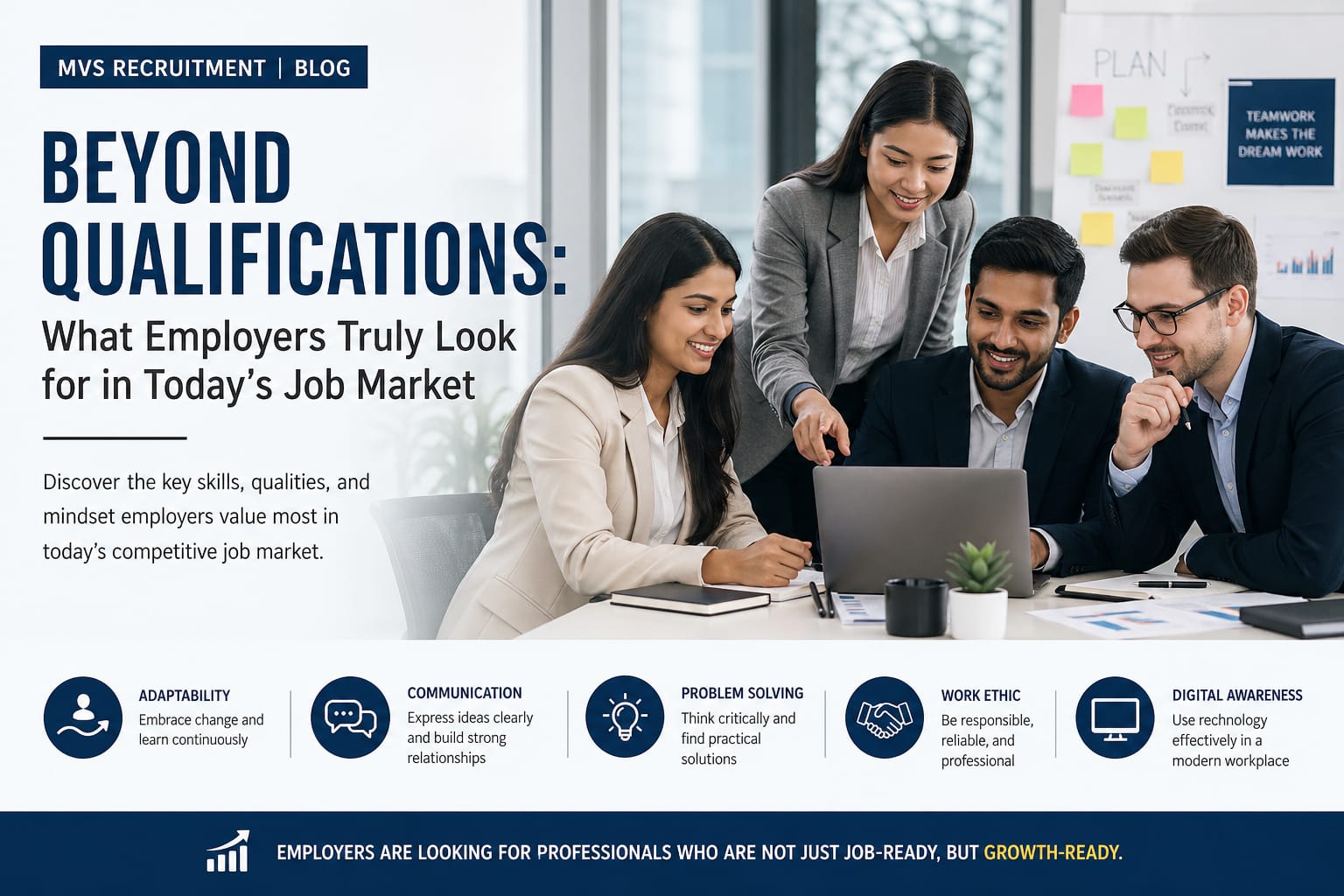
Beyond Qualifications: What Employers Truly Look for in Today’s Job Market
In today’s highly competitive job market, qualifications alone are no longer enough to secure long-term career success. While degrees, certifications, and technical expertise remain valuable, employers are increasingly focusing on candidates who bring a combination of professional skills, adaptability, and the right mindset to the workplace.
Modern organizations are searching for individuals who can contribute beyond their job descriptions. Companies now value employees who are flexible, proactive, and capable of growing alongside rapidly changing industries. As technology and business environments continue to evolve, the definition of an ideal candidate has expanded significantly.
Adaptability: The Most In-Demand Skill
One of the most important qualities employers seek today is adaptability. Businesses are constantly experiencing changes in technology, market demands, and work culture. Employees who can quickly adjust to new systems, learn updated processes, and remain productive during change are highly valued.
Adaptability demonstrates resilience and a willingness to grow. Employers prefer candidates who are open to learning and capable of handling evolving responsibilities rather than individuals who are resistant to change. In many industries, the ability to continuously learn has become more important than existing knowledge itself.
Communication Skills Matter More Than Ever
Strong communication skills have become essential across almost every profession. Whether it involves speaking with clients, coordinating with teams, handling customers, or presenting ideas, effective communication directly impacts workplace efficiency and collaboration.
Employers appreciate candidates who can express themselves clearly, listen actively, and maintain professional interactions. Good communication not only improves teamwork but also helps in building trust, resolving conflicts, and creating a positive work environment.
In remote and hybrid work models, communication skills have become even more critical. Professionals who can confidently communicate through emails, virtual meetings, and digital platforms often stand out during the hiring process.
Problem-Solving Ability Creates Real Value
Employers today are not simply hiring individuals to complete assigned tasks. They are looking for professionals who can identify problems, think critically, and provide practical solutions.
Problem-solving ability reflects intelligence, creativity, and leadership potential. Employees who can handle challenges independently reduce operational difficulties and contribute to business growth. Organizations highly value individuals who remain calm under pressure and approach situations with a solution-oriented mindset.
Even in entry-level roles, companies now prefer candidates who show initiative and demonstrate the ability to think beyond routine responsibilities.
Professional Attitude and Work Ethics
A positive professional attitude often makes a stronger impression than technical expertise alone. Employers pay close attention to qualities such as punctuality, responsibility, discipline, and reliability during the hiring process.
Strong work ethics indicate commitment and professionalism. Candidates who consistently demonstrate accountability and maintain a positive approach toward their work are often considered dependable team members.
Simple habits such as meeting deadlines, respecting workplace culture, and maintaining professionalism can significantly influence career growth. Many employers believe that skills can be taught, but attitude and ethics are developed over time.
Digital Awareness Is No Longer Optional
In today’s technology-driven workplace, digital awareness has become a basic requirement across industries. Even non-technical roles now involve the use of digital tools, online platforms, software systems, and virtual collaboration applications.
Candidates with basic digital knowledge often have a competitive advantage. Familiarity with tools like Microsoft Office, Google Workspace, CRM software, virtual meeting platforms, and data management systems demonstrates readiness for modern work environments.
As businesses continue adopting digital transformation, employees who are comfortable with technology are likely to adapt faster and contribute more effectively.
Growth Mindset: The Key to Long-Term Success
Ultimately, employers are looking for individuals who are not just job-ready, but growth-ready. A growth mindset reflects a person’s willingness to improve continuously, learn from experiences, and take on new challenges.
Professionals who invest in skill development, stay updated with industry trends, and actively work on self-improvement are more likely to succeed in the long run. Employers recognize the value of candidates who are motivated, curious, and committed to personal and professional growth.
Conclusion
The modern job market requires much more than academic qualifications and technical skills. Employers today seek well-rounded professionals who can adapt to change, communicate effectively, solve problems, maintain professionalism, and embrace continuous learning.
Candidates who focus on developing both technical and soft skills position themselves for greater career opportunities and long-term success. In a world where industries evolve rapidly, the ability to grow, learn, and contribute meaningfully has become the true measure of employability.